Saturday, July 10, 2010

"If you found ONE, they probably made a THOUSAND."

Your author would have looked just as stupid in this in 1991. 

Pretty much everyone I know who lived in Brooklyn in the 90s fondly remembers Domsey's, a Williamsburg-Bridge-area clothing place legendary for its by-the-pound offerings in the basement.  I found many staples of my ridiculous art-school-era "look" by sifting through piles of rags, ducking the bulldozers that were shoving bales of clothing, and pulling out the most gloriously weird stuff I found.

Nothing topped the mighty GRUNGE jersey, though.

A baseball jersey with an African-tricolor motif (red and yellow front panels, green sleeves, and a black back and hood), with five-inch-tall lettering spelling out the decidedly-not-Afrocentric word GRUNGE.  It was the sort of thing a computer simulacrum would wear when it appeared to the United Nations, had it learned the ways of Earthlings entirely by watching VHS tapes of MTV from 1991. I found it around late 1999 or early 2000, long after it would have been timely in its misguided squareness.

The best thing about the jersey, other than it being hilariously ugly and uncool, was that it was produced by Spike Lee's short-lived 40 Acres and a Mule stores, themselves a time capsule of that period in the 90s when independent film still felt like something...well, independent.  Unless the piece was a custom (not likely, given the price point of the 40A stuff when there was a store on Dekalb Avenue by Pratt), the GRUNGE jersey was a product which had been given the green light at least a few times between the drawing board and the coat hanger.  I like to think that Spike Lee himself looked at the design on paper and said "Yes - this is exactly what I need to promote my brand as a vital aspect of Brooklyn Afrocentrism.  Look out, Moshood!"

My wife (a costume designer who certainly knows her way around bulk clothiers) put it well:  "The chances are, this was not a custom, and if you found one, they probably made a thousand of these."

Sadly, before I was able to finally wear it to a Spike Lee signing, I realized that it had been several years since I last wore it (and that I never even wore it in a promo photo for my late hip hop project, for which it would have been a perfect statement of my "it doesn't matter if you cheer my name or hiss me" persona).  I ended up selling it to Beacon's Closet in Williamsburg about six months ago, and have since kinda-sorta expected to see it worn by some yahoo on Project Runway or in a band-promo photo in L Magazine

I wonder if, ten years from now, I'll see a piece of clothing made in 2010 that so completely got 2010 wrong.  Or am I now too old, too distanced from anything resembling the cool stuff?  Would I even recognize square anymore?

Push those gender roles early!


Seriously, MAM?

Thursday, May 27, 2010

Brooklyn Friends School “Invents the Museum”


I've worked for several years as a pre-college instructor, teaching art and art history to high-school students.  I've also spent the last two years working towards K-12 Art Ed certification, with the ideal goal of teaching high school students.  As a true believer in teenagers' art, and a student of art education, I must say that the bar has been raised, both for high school art and for teaching high school art, courtesy of a show planned, produced and curated by the Brooklyn Friends School Art Club Cooperative and their teacher, Elizabeth Deull.


Before I go further, I should state that a) my wife is a teacher at Brooklyn Friends School; b) I've worked with several, but not all, of these students as a student teacher at BFS in the Fall 2009 semester; and c) I'm a recent graduate of the same art-education program as Ms. Deull, and have gotten to know her a bit at BFS over the past six months.  As such, I'm not an unbiased observer - and I know that those few people who visit this blog expect nothing but the highest in journalistic integrity.


That said, this show of high-schoolers' work stands up aesthetically and conceptually to the majority of group shows in small commercial galleries in New York City.  I'm very happy that it has been extended through June 6th, to coincide with the Atlantic Avenue Art Walk, and hope that it gets a lot of views and attention.


Okay, so let's talk a little bit about the art, shall we?  In the words of the show's press release (here): 

"In 'Invent the Museum' students chose to react to or reinvent an artwork or art idea that already existed in the world. This theme allowed students to research artworks of interest from a wide range of time periods, artists, artistic movements and media. They also learned about how artists and art movements from WWI to the present have developed new art ideas and expressions in reaction not only to the world around them, but often to the art that came before them. As a result, the student artists of The Art Club have constructed a show that presents their unique, contemporary take on both famous and more obscure artworks that span from the Renaissance to Postmodern times."


The show makes excellent use of a strange little storefront space on Hoyt Street in Brooklyn (half a block north of Atlantic Avenue) - the first thing you see walking by is a series of dolls made by the entire Art Club, each the familiar face of the Mona Lisa.  It's a nice introduction to an exhibition that makes the viewer look at familiar artwork through the eyes of some of the newest acolytes to art history.

All of the work was impressively left-brainy for such young artists, and some pieces struck me as the equal of works from artists several years older and more experienced than these students.   As I said above, this show stands up to most of what's up in group shows in NYC, and that's mighty impressive for a bunch of artists too young to legally vote.

Here's what's on display:


Ashley Felix's linocut self-portrait (based on Egon Schiele's Self-Portrait with Hands Folded) makes explicit the sort of stance Warhol made with Gold Marilyn - by referencing classics from art history in the process of depicting herself, she's planting a flag in the long-running conversation of art.


please click this image to see it in its proper proportion!

Becky Grenham's painting perfectly states the tongue-in-cheek reframing of this exhibition's questioning of what gets to be considered a "classic" work of art, and why. Degas' dancer takes the floor at a discotheque, enjoying the attention of club kids rather than the stodgy folks who read about her in a copy of Janson's or the hoi polloi who know her as a calendar motif. Culture high, meet culture low. I love the colored dots showing the play of light off a disco ball – it implies movement and increases the tension between the figures and the flat black background, as well as making me think of Damien Hirst's "dot paintings."


Wiley Guillot has a great hand already - he draws beautifully and idiosyncratically, and that makes his response to Kiki Smith's work feel fully independent of his art historical reference (I mean that in the best way).


When I last saw Staver Klitgaard, she was immersing herself in painting, learning everything she could about how the Old Masters composed and produced their imagery.  Her work in the show shows this exploration heading in a different direction:  digital "painting reenactments" of herself and another Art Club member as figures from Picasso, Goya and Vermeer (I wonder how Picasso would feel to know that he's considered an Old Master by the newest crop of artists...I agree wholeheartedly, and Portrait of Olga dans un Fauteui is an excellent painting for a modern young woman to reenact).


Manos Lupissakis processes "traditional" graffiti, Banksy's stencils and wheatpastes, and the general aesthetic of peeling paint in the subway system to make an Ode to the Subway that I found worth poring over inch by inch.


Samantha Rees's wall of small pen-and-ink portraits comment on the emotional content of traditional portraiture, and use the wall beautifully and evocatively, while her Self-Portrait in the Style of Van Eyck suggests an amazingly diverse group of artists:  Van Eyck, Kahlo, Klimt, Redon, even Stettheimer.


(this show ismuch more impressive than my ability to successfully format this blog entry...)


Amina Ross
is well on her way as an artist already:  her stunning modern interpretation of an African-American mourning quilt commands attention from the viewer, and her corner installation Defective Oracle made me chuckle for a moment, then ponder it for several days. 


Nina Ryser adds collage and her own drawing style to reprocess the work of Keith Haring into something much more her own.  This would fit right in at a Williamsburg gallery, and I'd love to see variations on the theme.  I love the head and neck that haven't been painted in at all - it sets off the wood grain and collage nicely.


Romy Smith makes a statement similar to Ashley Felix's referencing of the Egon Schiele self-portrait, only with a lot more humor – her How Botticelli's Woman Got Her Groove Back subverts the Portrait of a Young Woman by styling the sitter more like 1980 than 1480. The model's smirk makes it clear that she's in on the joke.


Allie Shyer's installations, collages and assemblages process Schwitters and Cornell with a design sense that (in my eyes, your mileage may vary) echoes the presentation of jumbled, disconnected imagery on a Google image search (or maybe mid-career Richard Prince).  I've seen a lot of her work by now, and it's all quite impressive.


 The Art Club Cooperative is such not just in name: several other pieces in the room were produced in collaboration. The back windows of the small space are covered in marker-on-acetate (?) reproductions of classic self-portraits…


 …hung over a shelf covered in plastic animals, all painted pink. My toddler LOVED that part.


There is also a wall of artworks made in the gallery by the Art Club members, all for sale at a measly $5 apiece. I bought two, and hope to buy a few more before the show ends. Money from the sales goes towards the Michael Nill Endowment Fund for Faculty Development, which will directly benefit Brooklyn Friends School and thus its students.

If you go, you really owe it to yourself to buy a piece of artwork. I can't wait to put mine up in my apartment once the show comes down (one of the ones I bought is the white panel with mounted 3-d black ribbon, visible under the appropriated picture of Wolverine. It's that kind of show.)


If you haven't been able to tell yet by reading my glowing praise, I'm very, very impressed with the caliber of artwork in this show, and by Ms. Deull's ability to work with students of this age to produce a show this impressive.  I hope to get the chance to work with high schoolers again soon and will keep this show in mind as the exemplar of what can be done with talented high school students, provided that you give them a real, meaningful project to work on and push them to challenge their own limits. 


"Invent the Museum" is up through June 6th (whether the BFS link at the top of this post says so or not) at 77B Hoyt Street between State Street and Atlantic Avenue, a space generously donated by the building owner, Nat Hendricks.  Go see the show, wouldja?

Tuesday, May 4, 2010

B-Side wins again (Happy 73rd Birthday, Dick Dale!!)


If you can explain to me how a song this awesome could have been relegated to the B-side of a single, I'll owe you one.

Tuesday, April 27, 2010

Everything is relative (or, at least, color symbolism sure is)

Courtesy of Information Is Beautiful comes this amazing diagram(?) of the different meanings colors have various cultures around the world.


Click the link I gave above (or click it here if you demand instant gratification) to see a much larger, more legible version of the image.  It's the final cover design for the book  Information is Beautiful by David McLandess, which you can buy with this cover in the UK or with an inferior cover and title but the same text inside in the US.

Tuesday, April 20, 2010

RIP: Keith "Guru" Elam (1966-2010)


43 years old.  Hard to believe that Guru was able to get as much done for hip hop (and, let's be fair, for the popularization of jazz among Gen-X-and-younger African-Americans) as he did in such a short life.

Embedding on this blog doesn't work all that well.  Here's a video of "Mass Appeal", my favorite Gang Starr track (or, well, one of the two or three dozen of my favorite Gang Starr tracks - I might have picked a totally different one if I'd posted this tomorrow).  Click it and thrill to the man's voice.  His rhymes were always good, but it was his voice that he'll be remembered for most.

RIP

Monday, April 12, 2010

My first experience with "Outsider Art"


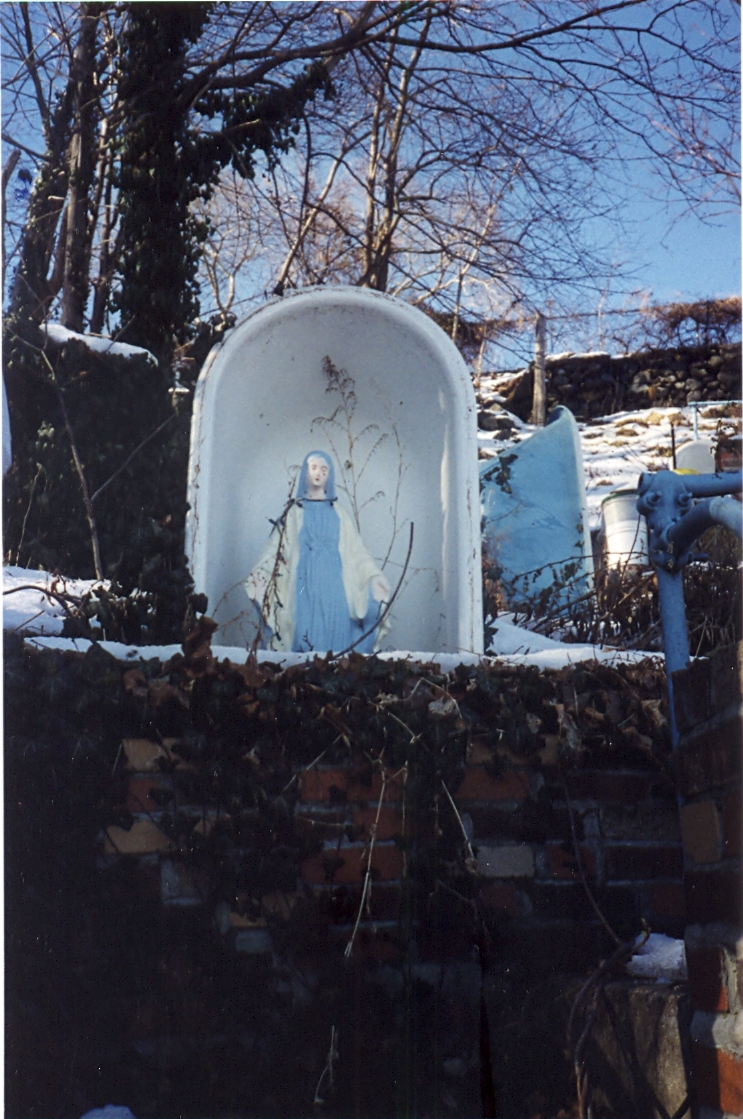
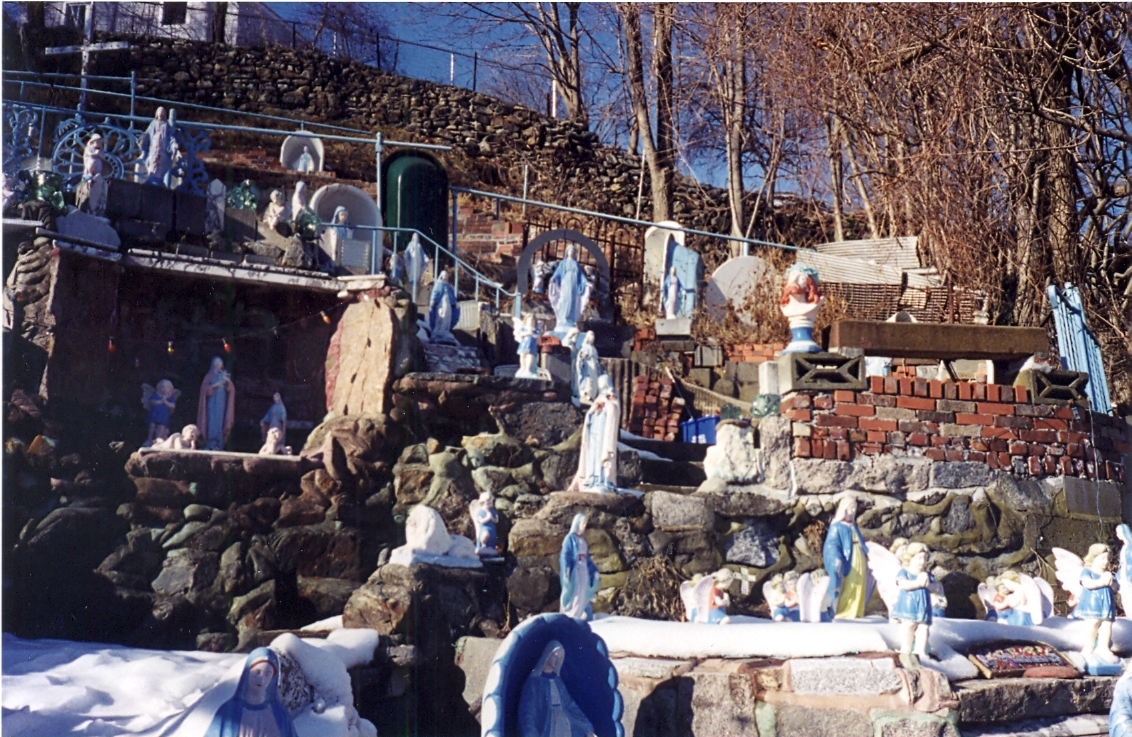
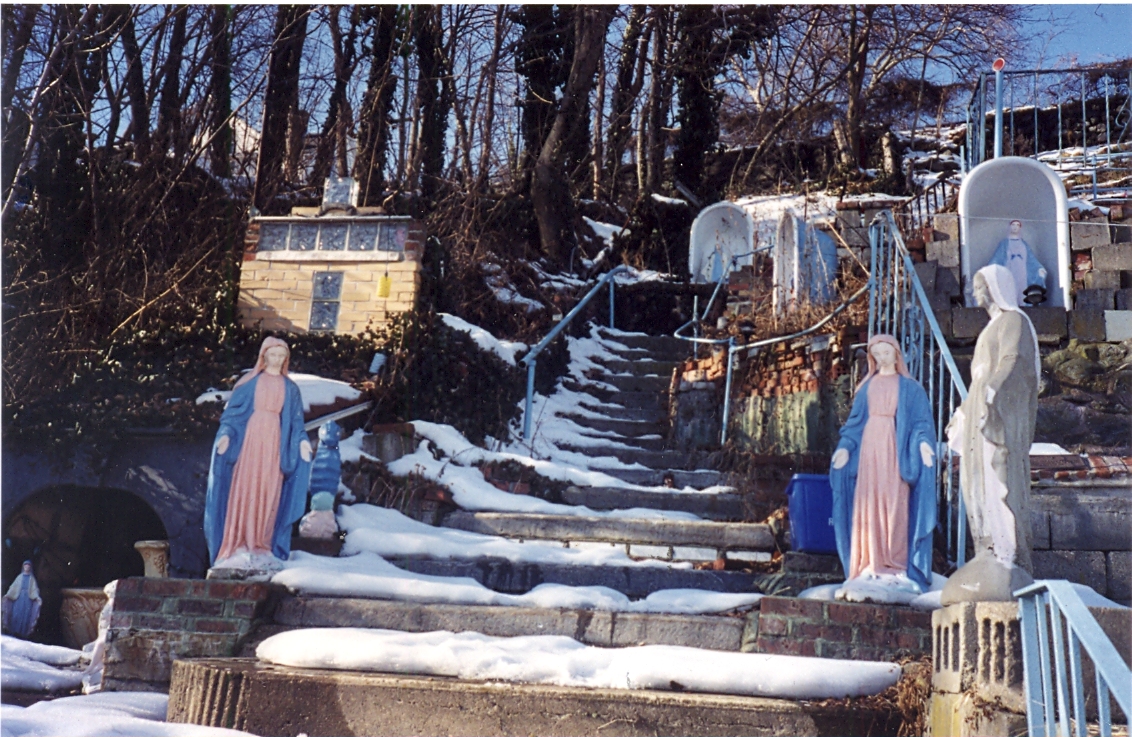
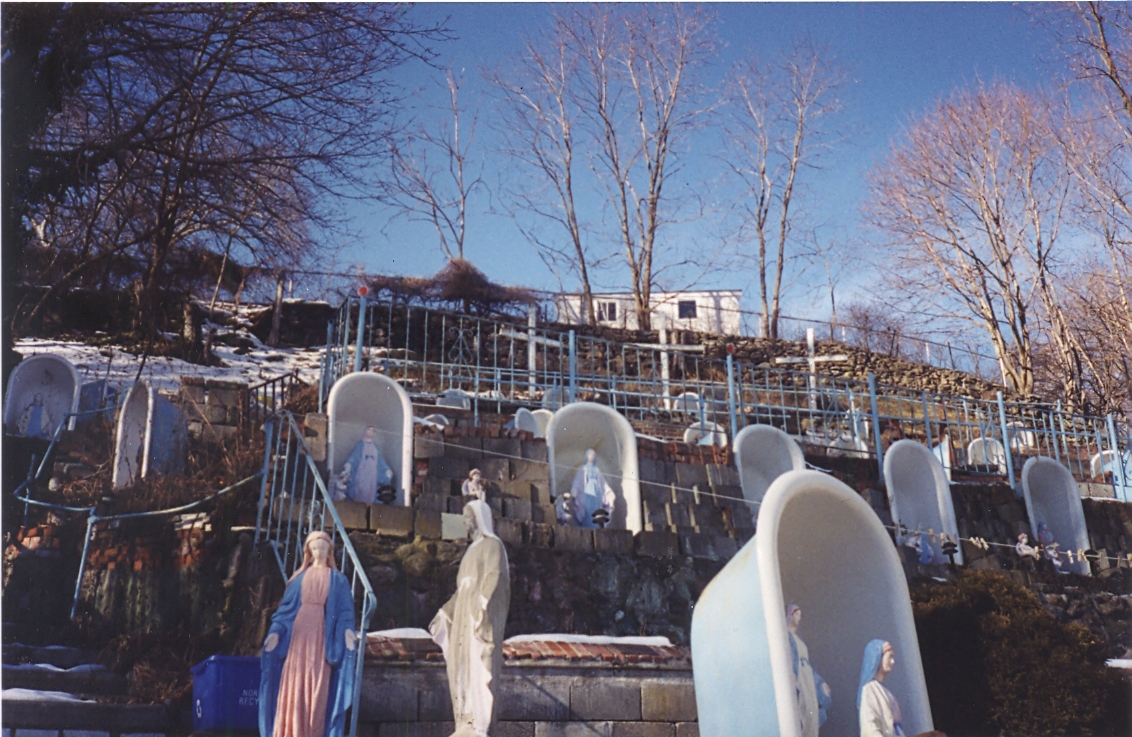
 Photos (circa winter 98-99) for this blog entry supplied by Jana Savanapridi of the Thunderfakers.  Check out her music!

If I recall correctly, I first heard the term "outsider art" sometime in the early or mid-90s, while I was at Pratt Institute studying painting (and trying my damnedest to always be aware of "The Newest And Weirdest Shit").  It was likely around the time I first really studied Jean Debuffet -- he pretty much created the art-critical concept by coining the term "Art Brut" to describe artwork made by the institutionalized insane.

The term "Outsider Art" is essentially an Anglicization of "Art Brut," though in some people's minds it refers not only to the institutionalized but to anyone whose artwork exists outside of the standard studio-to-gallery-to-museum-with-a-general-knowledge-of-what's-going-on-in-art-history mode.  That is to say, it's naive, and often a bit 'visionary' (much as I tend to avoid that term).

Aaaanyhow, when I first heard the term and had it explained to me, my reaction was "Oh.  Like the Sanctuary of Love."


Pretty much anyone who grew up in Norwich, Connecticut (or the rural area around it) and graduated from high school before 2004 or so knows of the Sanctuary of Love, even if they don't know its name.  It's probably been represented in the photography component of 90% of Southeastern Connecticut high-school students in who apply to art colleges.  It was a project built by the hands and mind and devotion of a carpenter named Salvatore "Sal" Verdirome, who did the only logical thing after having a vision of the Virgin Mary:  "It appeared to me and said something," he told the New York Times in 2000, "I couldn't quite catch it...I just started building."


By "building," Sal meant decorating the steep incline of his building's backyard with forty-seven upturned clawfooted bathtubs, each home to a concrete statue of the Virgin Mary (he poured the concrete himself).  Eventually, painted concrete seahorses and butterflies filled the yard as well.  Three large wooden crosses stood near a stone wall carved with the Ten Commandments.  The steps on the hill were filled with mosaics -- psalms and calls to prayer, a version of the Sea of Glass from the Book of Revelation, made of old broken glass from a nearby Thermos factory -- and eventually a lovely sign was posted on the steps leading up to the yard, reading, simply:

"WELCOME TO THE SANCTUARY OF LOVE.  Your Faith Has Brought You Here."


The Sanctuary had a long run as a destination for the sort of Catholic who makes visits to shrines devoted to the Virgin of Guadalupe (or any statue that weeps blood, of course).  In the 90s and early '00s, it became a place for those who'd lost money at the nearby casinoes to pray for luck at gambling (or for help after losing too much money).  Sal never charged admission, and let needy people stay on the property for free, though there was a bucket in the back yard that people often dropped coins into.


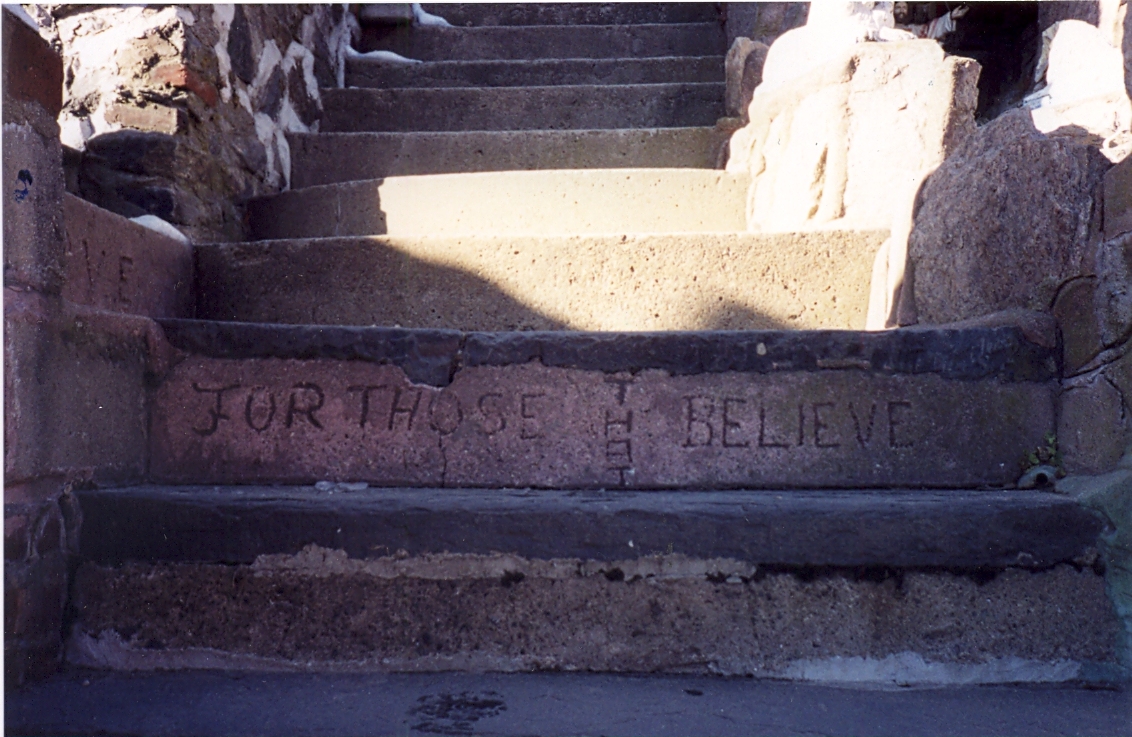
"FOR THOSE THAT BELIEVE"


Sadly, the Sanctuary might still be here had he charged admission.  Here's a link to the pages from the book Weird New England, which has a brief article on the Sanctuary of Love and a scan of the New York Times article detailing the sad end of the Sanctuary of Love:  the town of Norwich took the home due to some $60,000 in overdue property taxes and $40,000 in unpaid electricity bills.  Sal kept living in the building for as long as possible, eventually moving into a nursing home after foreclosure proceedings began in 2000.  He died of a stroke in 2004, at the age of 84, and made the national news one last time as an obituary and human-interest story.  Here's another great article on Sal from CTMuseumQuest.com.


Suffice it to say, I think that Sal might be a more appropriate recipient of the label than two of the subjects I've written about recently (Emmanuel P. Gill and Genesis Breyer P-Orridge), as he had no real interest in making art, or even being recognized for his work.  He was a humble, driven man who happened to make a beautiful, and meaningful, piece of art over the course of decades' worth of work.

As these photos from Flickr user Mike Z show, the site has been dismantled (everything that could be seen as valuable -- the statues, mainly -- was sold by the town of Norwich in 2002).  The bathtubs and mosaics remain, and they're still beautiful, but needless to say it isn't the same without the statues of Mary, and the frail old man who loved her so much as to devote his life to building her a shrine.

More on Outsider Art soon.  In the meantime, here's hoping that Eric Gearity's documentary on Sal and the Sanctuary of Love (documenting the last few years of Sal's life and his problems with the town of Norwich), gets aired and/or distributed via independent film channels.